


Education, Personal and Relationships

Education for Personal Relationships (EPR)
National Curriculum [2014]: The Purpose of EPR
To embrace the challenges of creating a happy and successful adult life, pupils need knowledge that will enable them to make informed decisions about their wellbeing, health and relationships and to build their self-efficacy. Pupils can also put this knowledge into practice as they develop the capacity to make sound decisions when facing risks, challenges and complex contexts. Everyone faces difficult situations in their lives. These subjects can support young people to develop resilience, to know how and when to ask for help, and to know where to access support.
‘Be the change you want to see in the world’ Ghandi
Cottesmore St Mary’s is very much a family school underpinned by God. We strive to maintain a caring environment in which kindness, good manners and respect for others are encouraged and nurtured. Above all, we ensure that each child feels supported and has the confidence to achieve their full potential.
What is EPR?
At Cottesmore St Mary, we promote personal wellbeing and development through a comprehensive Relationship, Sex and Health Education (RSHE) programme. RSHE forms a part of the Personal, Social, Health and Economic education (PSHE), Religious Education (Come and See), Citizenship, Computing, PE and Science Curriculum which together are collectively known in Catholic Schools as EPR – Education for Personal Relationships.
EPR (Education for Personal Relationships) is an essential part of our school curriculum- preparing children for opportunities, responsibilities and experiences both in school and in later life. It is integral across our whole school vision and curriculum and is tailored to the individual needs of the children in our school. Our EPR programme of study is built to equip children with a sound understanding of risk, and with the skills and knowledge to make safe and informed decisions.
What is taught and why?
Our EPR curriculum gives children the knowledge, understanding, attitudes and practical skills to live safe, healthy, productive lives and meet their full potential. We want every child and young person to have an education that prepares them for life's opportunities and challenges.
Our EPR curriculum covers lessons on the following themes:
• Physical health
• Mental Health
• Growing and changing
• Personal safety
• Relationships and sex education
• Bullying and discrimination
• Equality
• Media, digital literacy and online safety
• Money and work
• Community and responsibility
Education for Personal Relationship (EPR) Policy

Click the image to view pdf
INTENT
At Cottesmore St Mary, our aim for the EPR curriculum is to reflect the school’s vision and values. At the core of this is to demonstrate and teach the skills, knowledge and understanding that pupils need to lead confident, healthy lives and to become informed, active and responsible citizens. Children will learn about the emotional, social and physical aspects of growing up, relationships, sex and sexual health. EPR is taught in the context of relationships and promotes self-esteem and emotional health and wellbeing to encourage children to form healthy and meaningful relationships, based on respect for themselves and for others. At Cottesmore St Mary, we believe in working in partnership with parents and carers so that the child’s physical, moral, mental wellbeing and emotional development can be supported at home.
We believe that education is about the growth and development of the whole person and our EPR curriculum is very much part of this preparation. EPR gives the children opportunities to reflect on their feelings and relationships and develop the skills to manage them more confidently. They also learn about leading healthy and safe lives and about the cultural diversity of our world.
Our EPR Programme
We have developed our curriculum with recommendations from the Archdiocesan Education Department to ensure that they meet with Catholic Church teaching. After consultation with parents, EPR will be covered using the Archdiocesan recommended resource ‘Journey in Love’. We have considered the age, stage and feelings of pupils and have consulted with parents and staff to ensure we are offering a quality curriculum which is adequately catered to meet their needs. We have also adapted PSHE materials from a number of resources (mainly from the PSHE Association and Brighton and Hove PSHE team) which enable both PSHE and RSHE objectives to be met. We have planned a rich EPR programme that has clear progression. If pupils ask questions outside the scope of our curriculum, teachers will respond in an appropriate manner so they are fully informed and do not seek answers online. Each class have a question box which children can utilise after each EPR session. In addition to our school EPR programme we have several school initiatives that enhance structure and support children’s learning.
For more information on Journey in Love and RSHE provision, please see our RSHE page

Click the image to link
Through EPR, we aims to develop skills and attributes such as resilience, self-esteem, risk-management, team-work and critical thinking covering topics related to health and wellbeing, relationships and living in the wider world (including economic wellbeing and aspects of careers education).
British Values are promoted through the overarching aims and objectives of EPR by supporting our children to become healthy and responsible members of society, as well as preparing them for life and work in modern Britain. Children also complete a British Values unit. We have an ongoing British Values coverage document that is updated termly by SLT.
Through our EPR curriculum, our children gain the skills and understanding they need to lead confident, healthy and independent lives. Spiritual, moral, social and cultural development is embedded within our school ethos. Many faiths are now represented within our pupil body, with the principles of kindness and tolerance underpinning all that we do. The children attend a rich schedule of assemblies and masses and learn about other faiths- which reinforces this area of school life. We place great emphasis on mutual respect and acceptance, so that every child feels valued for who they are and celebrated. There is a rich vein of kindness and inclusivity running through the school which is communicated through EPR lessons. Children learn about the Protected Characteristics and the importance of inclusion and equality. We have an ongoing Protected Characteristics coverage document that is updated termly by SLT.
Our EPR curriculum is overseen by a dedicated co-ordinator, ensuring that children and staff feel supported across all areas of school life. Our pupils progress into secondary school as well-rounded and confident individuals.
What EPR topics do we teach?

Click the image to view the as a pdf
RHSE Curriculum Map

Click the image to view as a pdf
Teaching of the Protected Characteristics
It is important that all children gain an understanding of the world they are growing up in, and learn how to live alongside, and show respect for, a diverse range of people.
The Equality Act 2010, identifies the ‘protected characteristics’ as:
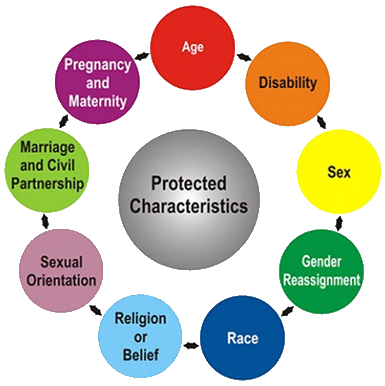
Age
-
Disability
-
Gender reassignment
-
Race - including colour, nationality, ethnic or national origin
-
Religion or belief
-
Marriage or civil partnership
-
Sex
-
Sexual orientation
-
Pregnancy and maternity
At Cottesmore St Mary, we pride ourselves on having a well-considered approach to the teaching of the protected characteristics, in order to:

-
eliminate discrimination, harassment, victimisation
-
advance equality of opportunity between persons who share a relevant protected characteristic and persons who do not share it
-
foster good relations between persons who share a relevant protected characteristic and persons who do not share it
Our Protected Characteristic Coverage document is regularly updated and shows are commitment to promoting equality. In addition to this planned approach, we react and respond to any incident as it arises within school, the community or is in the news.
At Cottesmore St Mary, we are committed to promoting honest and open conversations so that we learn from one another and listen to the lived experience of under-represented groups within our community.
What we are doing to foster good relations across all protected characteristics:
-
All children complete a half-termly book study on a Protected Characteristic. Children are asked to reflect on the message in the book
-
We promote a whole-school ethos and values which challenge prejudice- based discriminatory language, attitudes and behaviour.
-
We aim to provide a school environment that welcomes, protects, respects and celebrates diversity.
-
In order to prepare children for life in a diverse society, we ensure that there are activities across the curriculum that promote the spiritual, moral, social and cultural development of our students.
-
We teach about difference and diversity and the impact of stereotyping, prejudice and discrimination through RE, RSHE, EPR, assemblies, celebration days and across the curriculum.
-
We ensure that materials and resources reflect the diversity of the school population and local community. This includes a wide range of diverse reading material in the library.
-
We provide opportunities for students to appreciate their own culture and celebrate the diversity of other cultures.
-
We are developing further opportunities for students to contribute to our work in equality and diversity, e.g. through School Council initiatives, celebration of diversity and whole-school competitions.
-
We promote positive messages about equality and diversity through displays, school assemblies, visiting speakers and whole school events.
School staff receive racial literacy training to develop their knowledge and understanding.
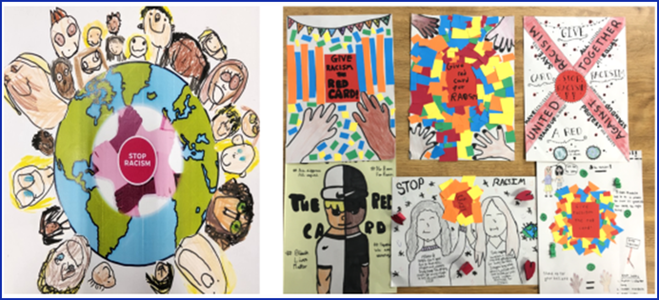
To see how we further promote equality, please see our Equality and Protected Characteristic Page

Click the image to link
Protected Characteristic
Curriculum Coverage

Click the image to view as a pdf
Protected Characteristic
Booklist

Click the image to view as a pdf
British Values
We actively promote British Values through our EPR curriculum, assemblies, educational celebration days, school council and our inclusive school ethos. Please check out our British Values webpage for more information.

Click the image to link
British Values
Curriculum Coverage
Click the image to view as a pdf
Cottesmore Reading book spine
As well as the books explored in Guided Reading sessions, each class selects a class reader which they read for pleasure daily. These books are selected from the Cottesmore Reading Spine but supplemented with teacher’s choice of texts. The Cottesmore Reading Spine consists of eight texts per year group that will be explored over their time at Cottesmore. They are split into eight topic areas which are poetry, non-fiction, diversity, well-being, global issues, inclusion, traditional tales and equality. Below you can find the Cottesmore Reading Spine.
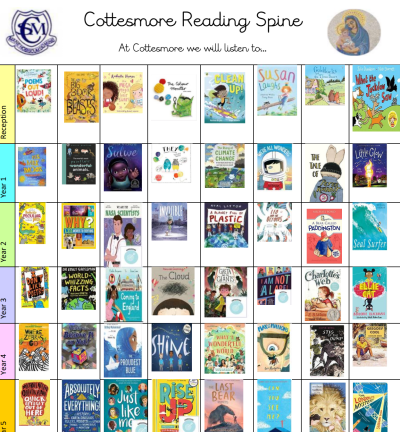
Click the image to view as a pdf
IMPLEMENTATION
EPR is the curriculum subject that gives children the knowledge, understanding, attitudes and practical skills to live safe, healthy, productive lives and meet their full potential. Cottesmore St Mary has chosen the RSHE programme, ‘A Journey in Love’ as recommended by the Diocese of Arundel & Brighton alongside adapted RSHE materials from a number of resources which enable RSHE objectives to be met. Additionally, it will allow for assemblies to be delivered which support the work being done in class All schemes of work have been reviewed by our trained EPR/RSHE Coordinator and other members of SLT. The teaching of EPR will also be embedded in a number of school experiences such as assemblies, visiting speakers from the community and school residential trips. Parents/ carers are informed before each topic so they can offer support to the child as required.
Our RSHE curriculum uses a spiral curriculum design which helps children to recall and build upon previous learning. We ensure that the topics are revisited and covered at a greater depth throughout school years allowing for a fluid transfer of knowledge.
How is it sequenced/ organised?
• The children have dedicated EPR afternoons (sometimes 2) at the beginning and end of every half term.
• Termly: Online Safety Lessons, Mental Health Lessons, Journey in Love lessons,
• Half-termly: A book study on a Protected Characteristic. Children are asked to reflect on the message in the book
• SRE is taught in summer term due to maturity- Year 5- Puberty Year 6- Conception
 At the beginning of every RHSE lesson ground rules are set. This is particularly important when discussing issues that may be sensitive. Everyone needs to feel confident and at ease when asking questions and discussing any issues they are concerned about.
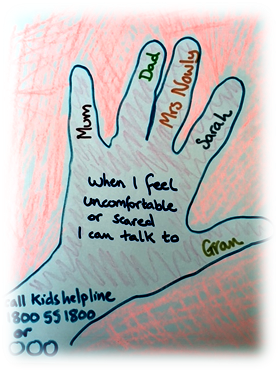
At the end of every RSHE lesson Children will be taught the steps to follow to seek help and support if they feel uncomfortable or anxious during or after the lesson, within and outside of school. Children are referred to the class question box. Children end the session with a guided meditation. There is also a question box available for children to use after each unit.
Helping hands- At the beginning of each half-term and at the end of every RSHE lesson, we support the children in creating their helping hands, which allows them to identify five key people who can support them through the year. These can be teachers, teaching assistants, midday supervisors, friends in the class, just to name a few. We revisit these helping hands regularly, reminding children of their support systems and encouraging them to talk problems through with the people that they trust.
Class EPR Books
Each class in KS1 and KS2 has an EPR Floor Book. Teachers use the EPR book to record a summary of each EPR lesson and include samples of the work completed in the lesson (including photos of practical work), a blurb to contextualise the learning and evidence of pupil voice and their reflections. EPR books are displayed in the classroom, to ensure that children are aware of the learning throughout every half term. EPR books are used during parents' evenings to showcase each child’s learning and encourage links with parents. They also provide an evidence-based log to inform tracking and demonstrate coverage of the EPR curriculum.
Children also have a folder where all there EPR work is kept. This goes home each year to celebrate with parent/carers all the wonderful work they have completed in EPR.

Enrichment in EPR
Opportunities for EPR-linked visits are planned for, as well as visits from guest speakers and organisations in the local community (emergency services). This also includes themed days/events, such as Anti-Bullying Week, Children’s Mental Health Week.


Click the lists above to view a larger image
Differentiation and Inclusion
During teaching we will ensure differentiation and inclusion and that EPR is sensitive to the different needs of individual pupils. We will respect pupil’s different abilities, levels of maturity and personal circumstances e.g. sexual orientation, faith and culture and ensure it is taught in a way that does not subject pupils to discrimination. Lessons will also help children to realise the nature and consequences of discrimination, teasing, bullying and aggressive behaviours (including cyber-bullying), use of prejudice-based language and how to respond and ask for help as outlined in our inclusion policy. The governing body have wider responsibilities under the Equalities Act 2010 and will ensure that our school strives to do the best for all of the pupils, irrespective of disability, educational needs, race, nationality, ethnic or national origin, pregnancy, maternity, sex, gender identity, religion or sexual orientation or whether they are looked-after children.
SEND provision
Learners can be scaffolded, and any individual needs can be supported where necessary.
-
SEND are supported through adult input.
-
Activities are differentiated so that SEND still access the learning.
-
Slides are sent home so families can do any pre-teaching.
-
High quality first teaching, visuals, word banks, pre teaching of key vocab.
-
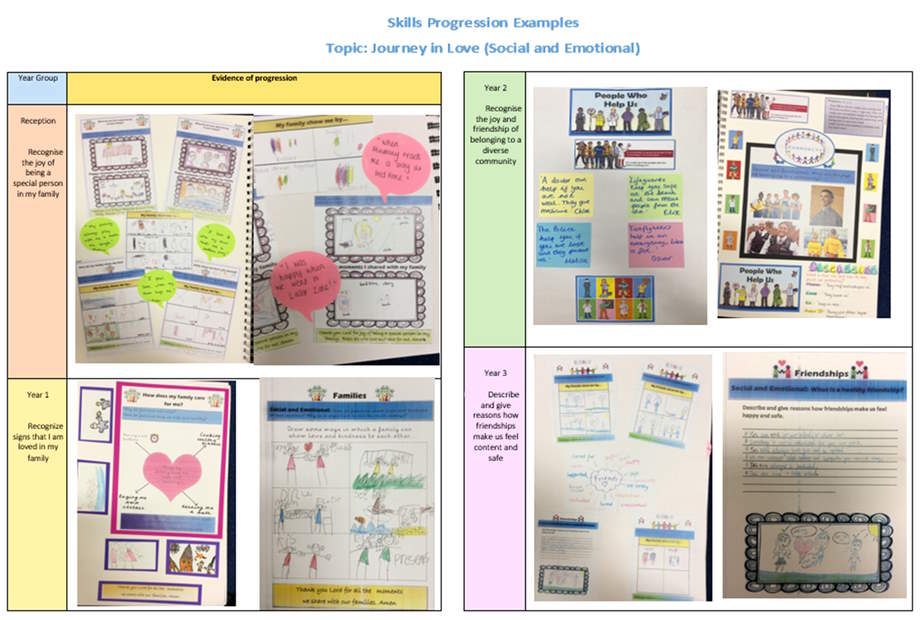
The class teacher will look at the Skills Progression Map and ‘I can’ statements before the lesson to see where the progression of skills and knowledge progress. These support teachers to feel more confident in their own subject knowledge, which in turn allows them to scaffold the learning of the children.
-
Parental newsletter sent home (with activity linked to the topic) so parents can support at home
We are aware that some pupils are more vulnerable to exploitation and bullying due to the nature of their SEND and will communicate with parents/carers to tailor content and teaching to their specific needs.
Greater Depth provision
Greater Depth challenges are provided for rapid graspers in order to give pupils the opportunity to develop and share their deepened understanding. Teachers are provided with a list of greater depth questions for these children to reflect and answer.
-
Indicators of deeper learning - abstract thinking / analysis, making connections and links, spot patterns and concepts, critical thinking, confident application of skills, analysing and interpreting sources.
-
The summative assessment process offers criteria for children either working at, beyond or towards the age-related expectations. Greater depth children can be challenged to ensure that they are being given the opportunities to enrich their learning further.
-
The class teacher will look at the Skills Progression Map and ‘I can’ statements before the lesson to see where the progression of skills and knowledge progress. These support teachers to feel more confident in their own subject knowledge, which in turn allows them to extend the learning of the children
IMPACT
Cottesmore St Mary will assess the impact of the EPR programme in several ways including lesson observations, teacher planning and book looks alongside discussion and feedback from both children and parents. The teaching and learning of EPR will be continually reviewed allowing any changes that need to be made. Achievements in the development of skills and values taught through EPR can be celebrated in a number of ways including assemblies, displays and weekly certificates. Parents and carers will be informed of their child’s progress in EPR through informal discussions, termly letters, parents evening and the annual school report.
Monitoring subject content and assessing children
Subject Lead monitors the impact of the EPR programme of study in several ways including:
-
Pupil Conferencing / Focus Groups / Pupil Voice
-
Review of recorded information from lessons (book looks)
-
Governor focus visit
-
Communication with teachers regarding lessons and planning (teacher voice and surveys)
-
Parental Feedback (2 year parental consultations and yearly parent voice)
-
Analysis of whole school data (Safe and Well At School Survey, CPOM Trends including number and type of bullying or prejudice based behaviour)
Assessing children’s progress
-
Teachers are given the skills progression and ‘I can’ statements for each topic so they can see what learning has happened before and what learning is coming after.
-
At the beginning of each RSHE topic, the children are shown key vocabulary for that lesson. Each lesson builds upon the previous year’s lessons This enables children to build a rich vocabulary that will help to develop understanding. This vocabulary is also signposted to parents
-
Feedback and assessment of knowledge, skills and understanding is made through observations during lessons, verbal feedback, floor book scrutiny and pupil voice.
-
Summative judgements (Working Towards/Working At/Working Above age-related Expectations) are recorded at the end of each unit of work for all KS1 and KS2 pupils
-
Children in KS2 complete a termly self-assessment which is shared with parents. Teachers also complete a termly assessment which is shared with parents.
-
In the EYFS profile assessment, children are assessed against ELGs for Self-Regulation, Managing Self and Building Relationships. This is reported to parents in end of year reports.
The model of assessment that is most meaningful in RSHE education is ipsative assessment. Children are assessed through pupil conferencing, teacher assessment and pupil and peer assessment. We assess knowledge, skills and values (informally and formally).
At the start of each new RSHE topic- Carry out a baseline assessment
The learning we wish to assess will relate to the pupils’ attributes and skills, as well as their knowledge and understanding related to the topic.
Activities include activities like: brief multiple choice quizzes; questioning, mind maps; graffiti walls, draw and write activities, explain to a visitor, questionnaires, quizzes, card sort, diamond nine etc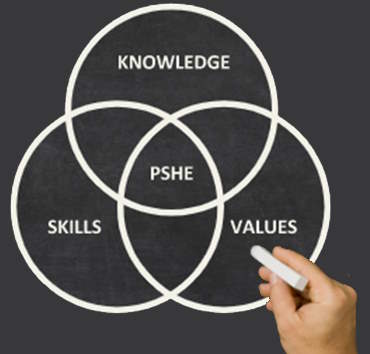
End of unit assessment of RSHE Learning
-
Repeat/ revisit the original baseline activity. Pupils can use a different colour to add to their baseline activity and make any changes they now want to make, allowing the pupil and teacher to clearly see how far they have come in their learning.
-
All our RSHE have final recorded activities, e.g. posters, slogans or personal reflections which are designed to be used for assessment knowledge and understanding.
-
Confidence scaling – re-visit question from the beginning of the lesson/ unit and ask children if their skills have grown / changed. Teacher note down range / changes from the show of hands or children add to their own recording square/scale in books.
-
End of unit activities could also include: Quizzes; questionnaires; problem page; scenarios; summarise the core-message; speech bubbles (how to say no safely); call my bluff / taboo games with personal and private body part words; scaling ; draw and write (draw a healthy person) ; diamond nine (ranking); if this is the answer – what was the question.
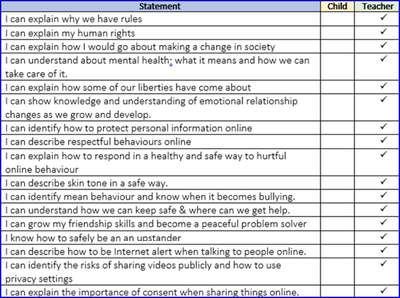
‘I can’ statements (self-assessment)
Children complete ‘I can statements’ (endorsed by the teacher).
-
The ‘I can’ statement is based on the learning intention.
-
If a child has not met the ‘I can’ statement, they write down what they personally have learnt that lesson.
-
If a child has not met the ‘I can’ statement, further provisions are put in place and relevant people are informed
Progression of skills
Our EPR curriculum uses a spiral curriculum design which helps children to recall and build upon previous learning. We ensure that the topics are revisited and covered at a greater depth throughout school years allowing for a fluid transfer of knowledge. The EPR Lead will monitor the work produced in the EPR books and will make sure progression is happening. A Skills Progression Map is updated after each term to monitor progress in each year group and to make sure skills.
Reporting progress and achievements to parent/carers
-
Pupil’s work is collected and presented in a class EPR book. Parents are invited to look through this at Parent’s Evenings.
-
Individual pupil’s work is collected and put in folders and provide evidence of pupil work for parents/carers. After each unit, each pupil will develop their own a personal ‘I can’ statement, endorsed by the teacher. Parents will receive these in end of year report with their folder of work.
-
During parents evening, many of the RSHE skills and values are discussed.
-
RSHE knowledge is reported on in end of year reports (formally).
-
RSHE skills and values are reported in end of year reports (informally)
-
If a child has not met the ‘I can’ statement, further provisions are put in place and relevant people are informed.
How do we ensure children remember what they have learnt?
-
Activation of previous knowledge – teachers use Progression of Skills map in order to see where pupils have visited concepts before and help pupils to make connections in their learning.
-
Regular retrieval practise – at the start of every lesson. True/False, quick quizzes, vocab bingo etc.
-
Repeatedly subjects each year. Skills progression map, spiral curriculum.
-
Teachers allow enough time at the end of lessons to recap on the original learning
-
Pupil conferencing
-
Assemblies
-
Awareness Days
-
Parental Involvement
RSHE Autumn Assessment

Click the links below to view pdfs
Reception |
Year One |
Year Two |
Year Three |
Year Four |
Year Five |
Year Six |
|
How can you support your child at home with EPR?
We believe RSHE is are not just learnt within the classroom. Effective RSHE Education is a partnership between the child’s home and school and there are lots of things you can do as a parent/carer to support your child’s journey.
-
Allowing your child to talk about PSHE topics at home can be a really good way for them to explore and contextualise some of the content. That is why we notify parents before each unit tools place (via EPR newsletter and weekly newsletter) and offer some follow up activities to complete with children at home. It also gives parents the time to research some of the areas that are coming up in their child’s PSHE programme, and anticipate any awkward questions.
-
On our school website, we also provide lot of links to help support the teaching of RSHE and personal development which are regularly signposted to parents.
Education for Personal Relationship - Newsletters
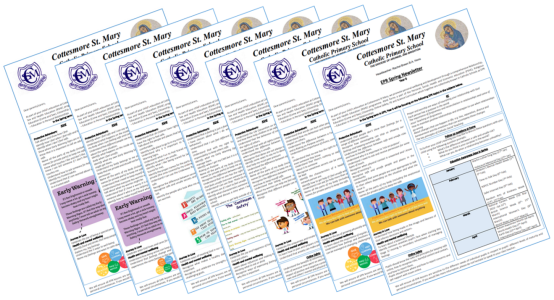
Click the links below to view pdfs
Reception |
Year One |
Year Two |
Year Three |
Year Four |
Year Five |
Year Six |
|
Online Safety
Keeping children safe online is one of the biggest challenges facing parents and schools. We take this issue very seriously at Cottesmore St Mary. Young people do need help and guidance regarding online behaviour and security. To support them, Online Safety is one of our EPR topics and throughout Computing lessons, children are educated in good practice.
We have a dedicated Online Safety page with tips on how to keep safe online which are regularly signposted via letter and newsletter. In this section of the school website we have links to various organisations which can give parents and students advice, technological knowledge and emotional support.
Online Safety opportunities across the school year: Termly online safety lessons, annual parental online safety forums, online safety taught through computing lessons, online safety work delivered in early morning focus (half-termly), Digital Leaders to support other children keep safe online, SAWSS analysis, Year 6 have extra online safety lessons in summer term, all staff receive regular online safety training and safeguarding training, on the website there is an Online Safety page with Online Safety pages and top tips on how to keep safe online, regular advice in the newsletters signposting parents to current online safety information, plus the celebration of Online Safety awareness days:
-
Safer Internet Day
-
Internet Legends Day
*Online Safety is always taught just before the holidays as we are aware that children will be on devices more
Wellbeing
At Cottesmore St Mary, we recognise that a strong sense of wellbeing is a gateway to life fulfilment. We are committed to providing the children with tools and experiences that help to overcome barriers in an increasingly busy world. In our school, we recognise that practises of wellbeing encourage pupils to believe in themselves, create compassion for themselves and others, and allow them to feel supported when vulnerable.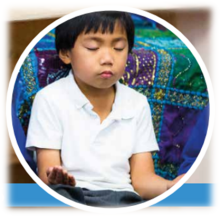
We want to inspire our children to develop in emotional maturity by giving them practises to use independently at school and in their later lives. We believe that a healthy mind is built through a healthy body, so we encourage healthy eating practises and see physical education and sport as a vital component.
Please check out our dedicated Wellbeing page which details all our provisions.
We understand that the wellbeing of all staff is integral to the wellbeing of the children and so our teachers model a culture of calm, care and concern. We know that a school’s ethos and environment influences the wellbeing and mental health of our children, so we work hard to create well-organised, peaceful and inclusive classrooms that allow children to achieve their optimum learning state.
Wellbeing opportunities at school: Termly wellbeing lessons (physical, mental), Good to be Me lessons, wellbeing journals, weekly positive affirmations, daily mediation, 5 ways to wellbeing, daily mile, random acts of kindness, worry boxes, mindful breathing videos by teachers, termly wellbeing surveys, wellbeing ambassadors, prayer corner for quiet reflection, wellbeing garden, Rosary Club, trained mental aid first aiders, wellbeing website page with relevant signposts for parents, regular wellbeing information and signposts in newsletters, plus the celebration of Wellbeing Awareness Days throughout the year:
-
World Mental Health Day
-
Children's Mental Health Week
-
Mental Health Awareness Week
-
International Day of Happiness
<img style="display: block; margin-left: auto |