


Protective Behaviour
PROTECTIVE BEHAVIOURS
Feeling good, feeling safe
Protective Behaviours is a safety awareness and resilience building programme which we use at Cottesmore St Mary to teach the children about keeping safe. This will always be taught in the Spring term and parents will be notified beforehand. We believe that this programme is an essential part of our school curriculum. It helps the children to recognise any situation where they may feel worried, unsafe, uncomfortable, bullied or threatened, and explores practical ways to keep safe in a variety of situations.
Protective Behaviours also looks at identifying support networks for times when we need someone to listen and help. Protective Behaviours is based on two key messages:
We all have the right to feel safe all of the time.
We can talk with someone about anything on our minds.
There are four key themes to the programme:
Lesson 1 - Feelings and Feeling safe
Lesson 2 - Feeling Unsafe and early Warning Signs/The Safety Scale - 'Fun to feel scared'
Lesson 3 - Body awareness and safe Touch/Secrets and Telling
Lesson 4 - Getting Help/Networks of Support, Problem-Solving and Resistance
Throughout the programme the children are encouraged to recognise their feelings of safety in different situations. When we feel unsafe, our bodies tell us through physical sensations that something is wrong. Within our working school these situations are called early warning signs; however we may also refer to them as natural instincts, gut feelings or intuition.
Children are encouraged to identify their early warning signs - for example, butterflies in their stomach, sweaty hands, goose bumps, racing heart - and the situations in which they can occur.
In a personal emergency, children are encouraged to:
-
Use safety strategies and personal networks to regain control of the situation and restore them to a state of physical and emotional safet
-
Dial 999 if in immediate danger
-
Report non urgent incidents by calling their local police station
Helping Hands
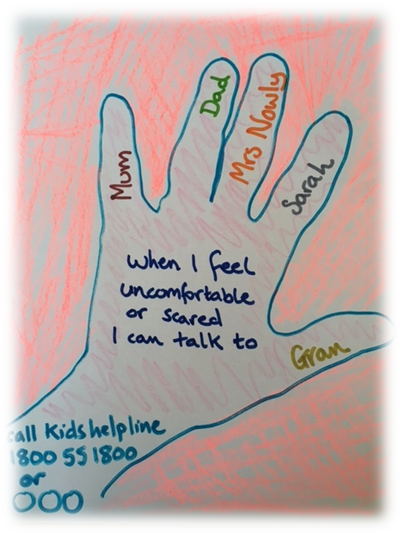
Children are encouraged to develop a 'Safety Network' of trusted adults who will listen to them, believe them and help them if they need help. Ideally, a child's network should consist of at least five trusted adults chosen by them who are available, supportive, trustworthy and willing to listen. They should also be willing to take action, if needed, in order to help the child feel and be safe again.
Networks of trusted people should be people children can talk to about all things - good things as well as things that concern them.
Language to keep us safe
Throughout the teaching of Protective Behaviours, the children learn that language is one of the effective tools that we have to inform, teach and influence other people. It is a key safety skill for children to be able to name all of the parts of their body including their genitals. It is important for children to be taught the correct anatomical names and feel comfortable using them if needed.
Children from Reception- Year 6 will be taught the scientific words that we are using for genitals and private parts: Penis, breasts, vulva, vagina, bottom, anus, nipples.
Please see below for an overview of year group lesson content and recommended follow up activities to complete with your child at home.
 Protective Behaviours Letter
(click icon to view pdf file)
Year Group Overviews
Year One
Year Two
Year Three
Year Four
Year Five
Year Six