


Early Years

Early Years
INTENT
Our Early Years Curriculum aims to lay a secure foundation for all children to become lifelong learners. We are fully inclusive, understanding that all children are different and unique. We recognise that children start school with a range of experiences, and so our curriculum aims to enhance opportunities, and ensure all children gain the essential knowledge needed, to prepare them for future successes. We expect our children to leave us as happy, confident learners who are curious about the world around them.
Our Early Years team works together to create a positive, caring atmosphere in which children feel safe to try new things and achieve their full potential. At Cottesmore, we know that children do their best when all their emotional and physical needs are being met. We support children’s personal, social, and emotional development by encouraging a growth mind set, taking part in daily meditation, building teamwork skills and, above all, encouraging them to dare to dream.
Every child is a competent learner who can be resilient, confident and independent. Through the use of our Learning Muscles, children are able to develop these skills along with imagination, cooperation and teamwork from an early age. These enable children to develop positive learning characteristics they need for future learning.
Our school values are embedded into everything we do. We foster a respectful, caring ethos, whereby all children are expected to think of the needs of themselves and others. We recognise that knowing the children is key to excellent Early Years practise and that parents know their child best. Therefore, we respect all families and aim to develop strong relationships with parents, building positive links and communications with them.
We want children to be immersed in their learning and so we take a hands-on, holistic approach to teaching. Through the seven areas of learning, we provide rich indoor and outdoor experiences in which adult interactions during planned, child-initiated activities are at the heart of our teaching.
Topics are exciting and engaging, building on children’s own interests and developing their experiences of the world around them. We use our forest school area to create memorable experiences where children are able to use all their senses, make links to other learning and develop skills and knowledge in a meaningful context. We aim to provide children with the best start in school life and equip them with the tools they need to face new challenges. We want children to make the most of all learning opportunities and strive to be whoever they wish to be.
We aim to provide a broad curriculum which will enable each child to develop in their own way. In order to do this, we follow four guiding principles from the EYFS:
xxx
• Every child is a unique child, who is constantly learning and can be resilient, capable, confident and self-assured
xxx
• Children learn to be strong and independent through positive relationships
xxx
• Children learn and develop well in enabling environments with teaching and support from adults, who respond to their individual interests and needs and help them to build their learning over time. Children benefit from a strong partnership between practitioners and parents and/or carers
xxx
• Importance of learning and development. Children develop and learn at different rates. The framework covers the education and care of all children in early years provision, including children with special educational needs and disabilities (SEND)
xxx
We aim to provide opportunities for learning through:
xxx
• Playing and exploring - children investigate and experience things, and ‘have a go’.
xxx
• Active learning - children concentrate and keep on trying if they encounter difficulties, and enjoy achievements.
xxx
• Creating and thinking critically - children have and develop their own ideas, make links between ideas, and develop strategies for doing things.
xxx

Click on the image to view the information in a pdf file
IMPLEMENTATION
The Early Years Framework
At Cottesmore, teaching in the EYFS is delivered in accordance with the government’s statutory document ‘The Statutory Framework for the Early Years Foundation Stage’ (March 2021). This document is a principled approach to the Early Years education, promoting teaching and learning to ensure children’s readiness for the next stage of education and bringing together children’s welfare, learning and developmental requirements through four main themes: ‘A Unique Child,’ ‘Positive Relationships,’ ‘Enabling Environments’ and ‘Children Learn in Different Ways and at Different Rates.’
Our curriculum at Cottesmore is centred around the three prime areas of learning. The prime areas play a significant role in encouraging children’s curiosity and enthusiasm. They are a driving force behind helping children as they learn to form relationships, moderate emotions and thrive in their day-to-day life. The three prime areas of learning are:
xxx
Communication and Language
xxx
• Listening, Attention and Understanding
xxx
• Speaking
xxx
Personal, Social and Emotional Development
xxx
• Self-regulation
xxx
• Managing Self
xxx
• Building Relationships
xxx
xxx
Physical Development
xxx
• Gross Motor Skills
xxx
• Fine Motor Skills
xxx
The curriculum is further supplemented through the four specific areas which provide opportunities to develop essential skills and knowledge. The specific areas of Learning cannot be developed alone, and rely on well-developed prime areas of learning. The four specific areas of learning are:
xxx
Literacy
xxx
• Comprehension
xxx
• Word Reading
xxx
• Writing
xxx
Mathematics
xxx
• Number
xxx
• Numerical Patterns
xxx
Understanding of the World
xxx
• Past and Present
xxx
• People, Culture and Communities
xxx
• The Natural World
xxx
Expressive Arts and Design
xxx
• Creating with Materials
xxx
• Being Imaginative and Expressive
xxx
The seven areas of learning are also underpinned by the characteristics of Effective Learning, which bring focus to the ways in which children learn. The three characteristics are:
xxx
• Playing and exploring - children investigate and experience things, and ‘have a go’
xxx
• Active learning - children concentrate and keep on trying if they encounter difficulties
xxx
• Creating and thinking critically - children have and develop their own ideas, make links between ideas and develop strategies for doing things

Click on the image to view the information in a pdf file
At Cottesmore, we value play as a fundamental part of the learning process in the Foundation Stage.
The indoor and outdoor environment are set up so that the children are able to access resources and develop their own play and learning both independently and through adult interaction and direction.
We organise the day to provide a balance between the following:
xxx
• Child Initiated Learning – children lead their own exploration and learning through the continuous provision on offer, using their own ideas, interests and curiosities to initiate play
xxx
• Adult Initiated Learning – adults plan and initiate learning with an intention in mind, however the children lead the learning themselves and take the learning in their own direction
xxx
• Adult Directed Learning – adults both plan and lead learning with a desired intention to develop skills and/or knowledge
xxx

Phonics
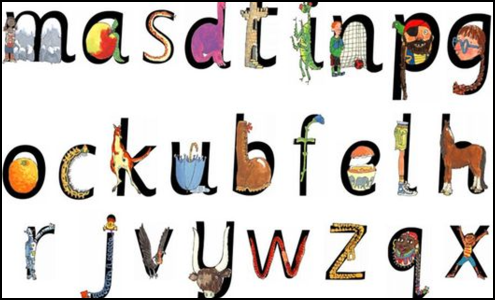
The phonics curriculum is delivered in a systematic way. We follow the Read, Write, Inc. The program ensures precision teaching, based on children’s starting points and progress. Phonics lessons are daily in Reception and Year 1, as well as for those still continuing on the program in Year 2. Everything in our phonics program is taught in a specific order to ensure progression and to build upon skills acquired.
xxx
• Initial sounds are taught first, alongside blending and segmenting skills
xxx
• ‘Special friends’ are introduced – two or more letters making one sound. ‘Red’ words (sight words that do not follow phonetic rules) are introduced
xxx
• Sounds are categorised into Set 1, Set 2 and Set 3 sounds
xxx
• Letter names are introduced with Set 3 sounds
In Reception children are taught Set 1 sounds and blending skills as a whole class for the first 5 weeks of school. Following this, they are assessed to monitor progress and placed into streamed groups – Read Write Inc uses colours to name these groups. The streamed groups ensure that all children are taught at a level that provided new learning and new challenges daily. Previous sounds taught are continually consolidated and revised to ensure they are embedded fully. Precision teaching is delivered daily and in the same style by all reading leaders. This ensures consistency between groups as children may have different phonics teachers delivering their lesson throughout the year, but the format remains the same with no new routines to learn when they change group.
Planning
Good planning is the key to making children’s learning effective, exciting, varied and progressive. Effective learning builds on and extends what children know and can already do. Planning is always informed by observations the Foundation Stage staff have made of the children, in order to understand and consider their current interests, development and learning needs.
Staff plan activities and experiences for children that encourage learning and development across both the prime and specific areas, while encouraging the characteristics of learning daily. They take into account individual children’s needs and interests to maximise engagement and progress. Staff meet together weekly to plan for the week and half term ahead, adapting planning as needed to fit the children’s interests and progress. Staff also interact with each other daily to share relevant observations to inform future planning, whether for the whole class or an individual’s needs.

