


Geography
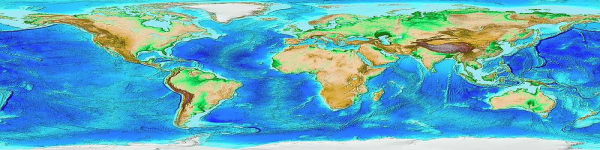
GEOGRAPHY
xxx
National Curriculum [2014]: The Purpose of Geography
“A high-quality geography education should inspire in pupils a curiosity and fascination about the world and its people that will remain with them for the rest of their lives. Teaching should equip pupils with knowledge about diverse places, people, resources and natural and human environments, together with a deep understanding of the Earth’s key physical and human processes."
xxx
INTENT
Geography Curriculum at Cottesmore
At Cottesmore St Mary we provide a high-quality geography curriculum which provides a broad and balanced view of the world. Topics bring together the human and the physical world through studying places at a variety of scales. We use the 'zoom lens' approach to zoom in and out from local, national to global perspectives, to enable the children to develop their understanding of location and how places are connected. Our ambitious curriculum supports pupils to gain a greater understanding of the ways of life and cultures of diverse people living all around the world. This not only supports their growing racial literacy, but fosters in them a love, appreciation and respect for the uniqueness of culture and importance of diversity.
We have deliberately created a knowledge rich curriculum and have defined the essential knowledge that pupils need to be educated citizens, introducing them to the best of human creativity and achievements. We have spaced knowledge, skills and concepts so that there is coherent flow to allow our learners to gradually build toward mastery and fluency. Topics are carefully sequenced across year groups to allow opportunities for children to make links and build their understanding of geographical concepts and skills in a wide variety of contexts. Links between topics have been identified, so that learning connects into a web of knowledge. We have defined expectations at key end points so we can assess the progress the children are making.
Children are engaged and inspired by a bespoke geography curriculum which draws on the uniqueness of our local area and the physical and human processes that shape it, using this knowledge as a basis for understanding and exploring other parts of the world. We have an onsite Forest School, led by a specialist teacher and TA, so that children can experience the world at first hand. In addition, in each topic there are opportunities for children’s learning to be enriched and brought to life through visitors and hands on experiences such as fieldtrips to the South Downs National Park, Rampion Wind Farm and Cuckmere River. We provide many opportunities for fieldwork, and have ensured experiential learning is an integral part of a learning journey.
Geography has a high profile at our school and we believe through the use of high quality resources, such as satellite imagery, digital mapping software, and video and photographic sources, it is possible bring the real world to life and inspire wonder and curiosity in the beauty of God’s creation and the achievements of humans.
Knowing that God has a special plan for all of us is at the heart of our learning and therefore we should all make the most of all learning opportunities. We want our children to dare to dream and always have self-belief in what they can achieve as geographers. Learning geography at Cottesmore not only prepares the children for studying the subject at secondary school, but inspires them to understand the relevance of the subject and use their geographical knowledge to make a difference in the world. At our school, geography is real and relevant and children learn about what careers paths the subject supports: environmental consultant, a landscape architect, a cartographer, a tour guide, a town planner, a traffic controller, a surveyor, a teacher, a conservationist.
Climate change and pollution are extremely important worldwide issues and, as an eco-aware school, we are committed to enabling children to explore how the world has changed over time and to realise their role in maintaining its future. The concepts of conservation, environment and climate change are explicitly taught and interwoven throughout the geography curriculum and the children’s role as responsible citizens of the world is explored and championed. Wherever possible cross curricular links are made to deepen children’s learning for example in guided reading, history, science and writing. Our children are passionate about our planet and looking after it.
Through our Eco Council we discuss environmental matters and decide on direct action we can take to protect the environment.
IMPLEMENTATION
What Geography topics do we teach ?
Geography at Cottesmore is a discrete subject and is taught in half-termly topics with each year group studying three topics every year.
In Key Stage 1 children start by developing their geographical skills and knowledge with a focus on our school grounds, the local area of Hove and Brighton Seafront. They learn about human and physical features of these areas and are introduced to capital cities and countries of the UK. Children read simple maps, create keys, use aerial photographs and atlases.
 Click the table above to view a larger image
In Year 2 pupils move on to learning about the world’s continents and oceans and complete an in-depth place study of Kenya, comparing and contrasting Brighton to the capital city of Kenya, Nairobi.
As children move into Key Stage 2 they begin to learn in more detail about physical geographical processes such as the water cycle, river formation, mountains and volcanoes. Human aspects of geography such as population, land use, settlements, food and farming are covered through topics such
as World Landmarks, Ghana, Pole to Pole and the USA. To ensure depth of understanding, key concepts are mapped out and are revisited throughout the curriculum allowing children to make links across topics.
Geography skills, knowledge and concepts are taught together and within the context of a real place so that children learn about the diverse people and places of the world.
How is Geography taught at Cottesmore ?
We recognise geography as its own subject with its own discipline and as a result a geography lesson at Cottesmore is recognisable and different from other subjects. We give children the opportunity to develop as geographers using real data such as maps, graphs, photos, videos, fieldwork and people. This data is the 'real stuff' of the subject and is the evidence children use to make generalisations and judgements.
Important concepts have been woven through the curriculum and identified at the planning stage so that they are taught explicitly and connections made as children develop their own subject knowledge. The big ideas of geography include place, location, scale, physical and human processes, connectedness and human impact and one or more of these underpin each topic.
A geography lesson is alive with conversations that allow children to develop their confidence with subject specific vocabulary. It inspires children to enquire about the world in which they live and interact. It sets alight a flame of curiosity and fascination about the similarities and differences between their local area and the wider world. It allows them to practise skills, which are carefully and sequentially mapped, that give them the capacity to independently collect, analyse and interpret information in order to make sense of the interconnections and patterns that exist.
Our young geographers ask the following questions, to support their understanding the of location places they study in the world and how they are linked.
 Click the image to view a larger version
We build retrieval practice into lessons, to ensure that children retain and can recall the places they have learnt about in previous topics, leading to the development of sophisticated schema in the subject. Pupils with special educational needs and/or disabilities are fully included in our provision for geography and teachers and other adults support these pupils so they access the same content as their peers.
‘Understanding the World’ in Reception guides children to make sense of their physical world and their community. In the Early Years, children give and follow directions, talk about where they live and the countries of the UK, observe weather, and draw their own maps using real object, and/or pictures and symbols. In addition, they listen to a broad range of stories, non-fiction, rhymes and poems which foster their understanding of our diverse world.
Teachers are equipped to deliver our curriculum through the provision of clear curriculum planning, wherein the knowledge, skills and concepts to be taught are clearly defined and links to prior learning are made explicit. Staff training is help to develop teachers’ subject knowledge. Additionally, our Subject Lead is a member of the Geographical Association, and its associated Twitter community, and attends regular professional development in order to be able to offer expert training, support and guidance to teachers.
Challenge in Geography
The Deeper Learning Journey
Staff have a shared understanding of what deeper learning looks like in all subjects and we have identified Indicators of Deeper Learning, including connected learning, critical thinking, consistent and confident application of skills and understanding of concepts, problem solving and independence. To provide a challenge for higher achieving children, we provide ‘What if’ challenges. These help children to achieve mastery level, as the higher order thinking questions give pupils the opportunity to develop and share their deeper understanding.
xxx
IMPACT
In agreement with OFSTED [handbook 2019], we define progress as ‘knowing more and remembering more’. Therefore, we have clearly identified the knowledge that is most important for pupils to learn and remember. Teachers use formative assessment to check what has been learnt and that learning has been remembered. It is used by teachers to provide feedback, to adjust teaching and learning and to identify pupils falling behind in the learning journey. At the end of each topic, teachers assess learning using low stakes quizzes. This information is used to inform judgements and to adapt learning if necessary. Teachers are clear what end points the curriculum is building towards and what pupils need to know and be able to do to reach those end points.
Assessments of core knowledge, skills and concepts are recorded at the end of each topic, and become the starting points for future topics. At the end of each year we report to parents on their child’s attainment in geography.
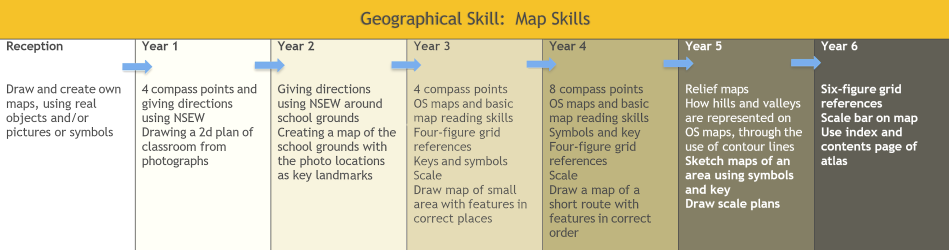
An example of skills progression in Geography
GEOGRAPHY FIELDWORK AT COTTESMORE
In each topic there are planned opportunities for children’s geography learning to be enriched and brought to life through visitors and hands on experiences. Throughout their time at school pupils will go on field trips to the South Downs National Park, Rampion Wind Farm and Cuckmere River. We provide many opportunities for fieldwork, and have ensured experiential learning is an integral part of a learning journey.
Year 1 Local Area Walk
On a wet and blustery Monday morning in April, Year 1 classes set out to explore our local area and visit some of the key features they’ve been learning about in Geography this half term. They walked past Cardinal Newman school and pointed out a bus stop, zebra crossing and multiple traffic lights. Walking past Tesco garage was a highlight! The children also did important community and societal work, litter picking around Dyke Park Road.

Year 2 i360 Trip
Year 2 had a fantastic time on their field trip to the i360 in November. The children developed their understanding of maps by spotting some of Brighton's landmarks from a bird's eye view. Then they went to the beach for some fieldwork and beach school activities. Children used natural resources to create artwork on the beach and ended the day with a calm, tranquil meditation on the shore. A super day was enjoyed by all!

Year 3 Cuckmere River
Year 3 had a brilliant time on their school trip to Cuckmere Haven. Their first task was to observe, draw and label the features of the Cuckmere River. After that, they walked along the meanders towards the river mouth and sea, spotting ox-bow lakes and tributaries along the way.
The second task was to design an experiment to measure the flow of the river. They did this by splitting into two groups and one group throwing a dog biscuit into the river and the other group timing how long it took to travel to them. They performed this experiment in two different parts of the river and found the results varied considerably at different points due to faster flow. After lunch on the beach, the class learned how to use an emergency shelter, identified shells and whelk egg cases, then finished with a litter pick.

Year 5 Rampion Wind Farm
Year 5 had an amazing time at Rampion Wind Farm as part of their Climate Change and Pollution topic.
Report from Doreen, Y5: We learned about how the windfarm was created, and the energy that it creates to provide electricity. At the centre, we participated in a number of exciting activities. Collaboratively, we worked together to answer questions about climate change and what impact renewable energy is having on the environment. We also created wind streamers from recycled materials before a real life experience of the role of a turbine engineer using virtual reality headsets!

SUPPORTING YOUR CHILD AT HOME WITH GEOGRAPHY
When visiting or talking about a new place, use the HOTCLUB and COWWS questions mentioned above to develop children’s understanding of place. You could also ask these questions:
Can you show where the country is on a world map?
What continent is it in?
What is the capital city of this country?
What are the key physical features of this place?
Are there any famous landmarks in this country/city?
What is the climate like?
How is this country similar/different to United Kingdom?
WHERE A KNOWLEDGE OF GEOGRAPHY CAN TAKE YOU

Websites to enhance geography learning at home:
www.ducksters.com/games/geography_games.php
www.3dgeography.co.uk/geography-topic
www.easygeographyforkid.com
Online labelling games to practise locational knowledge:
world-geography-games.com/en/world_continents.html
www.geoguessr.com/seterra/en/vgp/3069
x
x
x
x
x
x
x
x
x
x
x
x
x
x
x
x